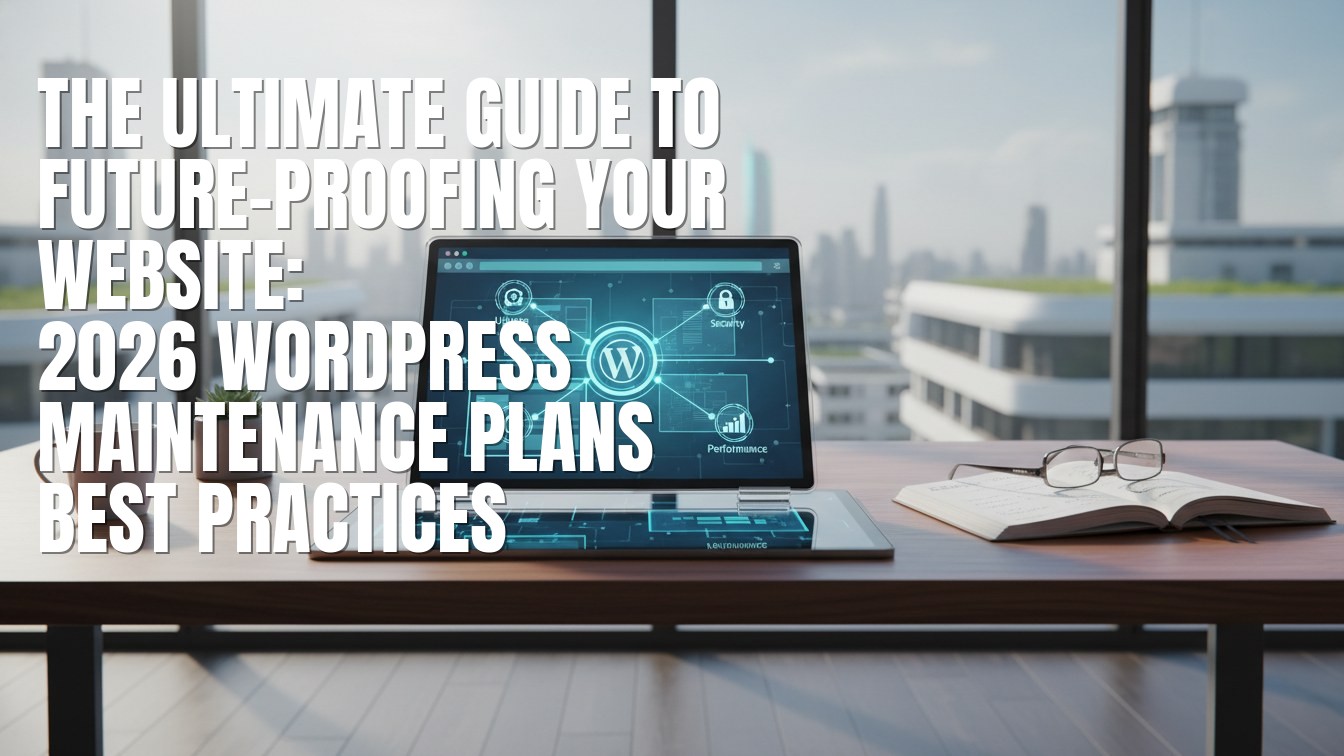
The Ultimate Guide to Future-Proofing Your Website: 2026 WordPress Maintenance Plans Best Practices
6/5/2026, 12:29 PM · By Yossi Medina | Service: Website Maintenance Plans
TL;DR
This guide explores essential best practices for WordPress maintenance plans in 2026, aimed at future-proofing your website. By adopting proactive strategies for updates, security, and performance, businesses can ensure their online presence remains robust and effective.
Explore crucial best practices for future-proofing your WordPress website in 2026. Our Website Maintenance Plans are tailored to keep your online presence secure, updated, and optimized.
Introduction to Future-Proofing Your Website
As we look towards 2026, ensuring your website stands the test of time is more crucial than ever. The digital landscape is constantly evolving, making website maintenance a vital aspect of any business strategy. This guide will detail best practices to maintain a WordPress site effectively, ensuring functionality, security, and a seamless user experience.
The Importance of Regular Website Maintenance
Regular maintenance protects your investment and enhances user experience. Here’s why:
- Security: Cyber threats are more sophisticated than ever. A solid maintenance plan helps safeguard sensitive data.
- Performance: Regular updates keep your site fast, which improves SEO and user satisfaction.
- Compliance: Keeping your website compliant with regulations like GDPR and ADA is crucial for credibility and legal protection.
Key Elements of a WordPress Maintenance Plan in 2026
A comprehensive website maintenance plan should focus on the following core areas:
1. Regular Updates
Frequent updates are critical, not just for the WordPress core but also for themes and plugins:
- **Core Updates:** Ensure WordPress is always up-to-date to leverage the latest features and security patches.
- **Theme and Plugin Updates:** Regularly update themes and plugins to avoid compatibility issues and vulnerabilities.
- **Backup Procedures:** Implement automated backups to recover quickly in case of data loss.
2. Security Audits
Conduct regular security assessments to identify potential vulnerabilities:
- Malware Scans: Regularly scan your website for malware and remove any threats.
- Firewall Implementation: Use a reliable web application firewall (WAF) for an additional layer of security.
- SSL Certificates: Ensure your website employs SSL to secure data transfer for user safety.
3. Performance Optimization
Improving the speed and responsiveness of your site not only enhances user experience but also positively impacts your search engine rankings:
- Caching Solutions: Implement caching strategies to speed up page loading times.
- Image Optimization: Ensure images are optimized for size without compromising quality.
- Code Minimization: Minimize CSS, HTML, and JavaScript files to reduce loading times.
4. User Experience Enhancements
Your website's usability directly impacts retention and conversion rates. Regularly assess:
- Mobile Optimization: Ensure your site is fully responsive and mobile-friendly.
- Accessibility Audits: Regular checks to ensure compliance with accessibility standards.
- User Feedback: Solicit feedback regularly to identify areas for improvement.
5. SEO Maintenance
Search engine optimization is an ongoing process that needs consistent attention:
- Content Updates: Regularly update and optimize existing content for keywords and relevancy.
- Link Building: Maintain a strategy for both internal and external link building.
- Analytics Monitoring: Use data analytics to monitor site performance and tweak your SEO strategy accordingly.
Implementing Your 2026 WordPress Maintenance Plan
Transitioning to a robust maintenance plan can seem overwhelming, but a structured approach helps:
- Choose Implementation Partners: Collaborate with a professional agency to establish a solid Website Maintenance Plan.
- Establish a Schedule: Plan out regular check-ins for updates, security audits, and performance evaluations.
- Documentation: Keep a log of all changes, updates, and incidents for transparency and future reference.
Conclusion
A proactive approach to website maintenance in 2026 is critical to future-proofing your online presence. By adopting best practices around updates, security, performance, user experience, and SEO, businesses can ensure their websites remain effective and secure. Need this done for your business? Contact us today for a free consultation or audit and take the first step towards a resilient online presence.