How Generic CRM Solutions Threaten Your Data Security and Ownership
8/16/2026, 12:02 PM · By Yossi Medina | Service: Custom CRM Software Development
TL;DR
As data ownership becomes a rising concern, many businesses are finding that generic CRM solutions compromise security and control over their data. Custom CRM software development offers tailored solutions to enhance data protection and ownership, mitigating risks associated with off-the-shelf options.
In today's landscape where data ownership is paramount, generic CRM solutions may expose your business to significant risks. Custom CRM software development provides a way to regain control and bolster data security.
The Data Ownership Dilemma
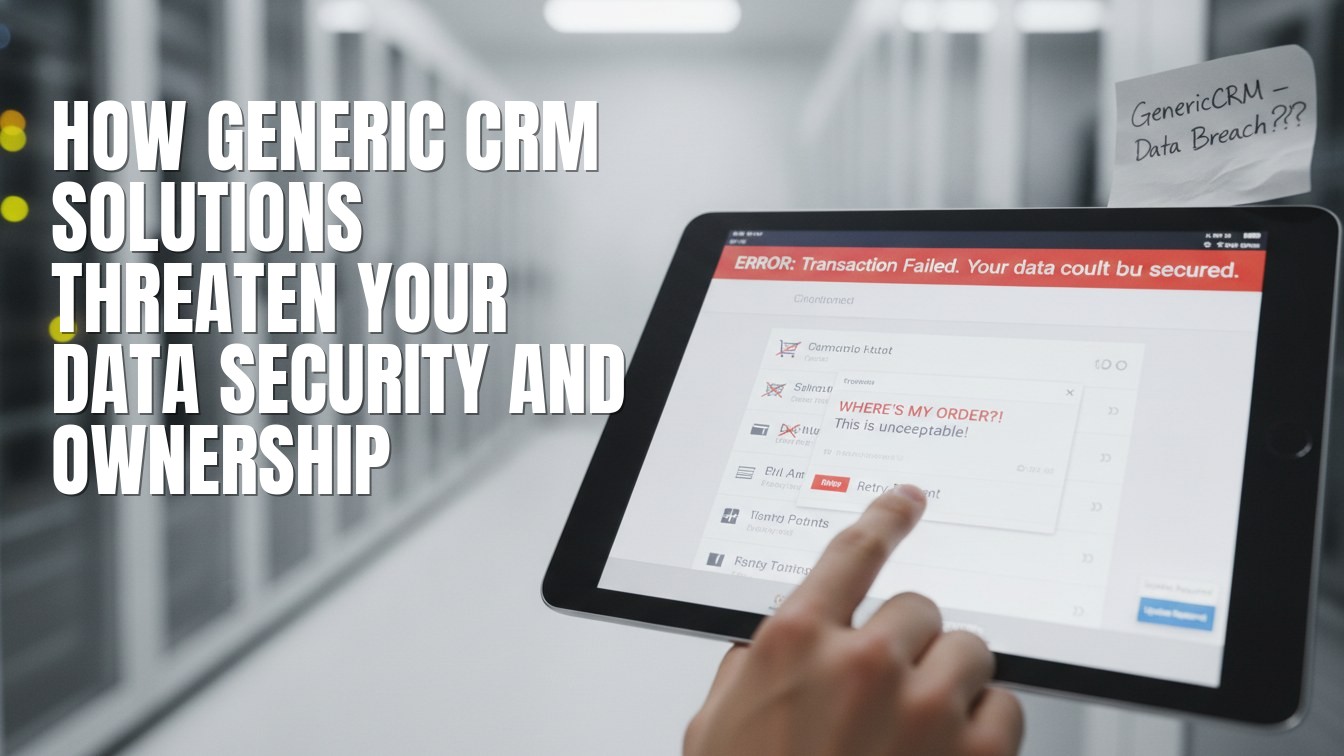
In an era of escalating data breaches and stringent privacy regulations, businesses face a critical challenge: ensuring data ownership and security. Generic Customer Relationship Management (CRM) systems, often touted for their ease of use and quick setup, can inadvertently put your vital data at risk. When businesses use off-the-shelf CRM solutions, they're often surrendering control over their own data.
Consider a small marketing agency that adopted a widely-used, generic CRM platform. Initially, it appeared to streamline operations, allowing them to manage client interactions effortlessly. However, as the agency started to expand, they encountered significant limitations in customization and data export options. Add in a data breach from the provider’s end, and the agency not only lost sensitive client data but also faced severe reputational damage. This illustrates how generic CRM systems can quickly evolve from beneficial tools to potential liabilities.
Why Generic CRMs Fall Short on Data Security
Generic CRM solutions typically come with built-in limitations and vulnerabilities that can jeopardize data security. Here are some common pitfalls:
- Limited Customization: Off-the-shelf CRMs often restrict data manipulation capabilities, leaving businesses unable to structure their data in a way that best meets their operational needs.
- Shared Environments: Many generic CRMs operate on shared servers, increasing the vulnerability to cyberattacks and data breaches, as other users can unintentionally compromise security.
- Vendor Lock-in: Some platforms may make it challenging to migrate data, leaving businesses stranded if the service goes awry or if cheaper, more suitable alternatives become available.
Each of these challenges not only threatens data ownership but also places sensitive information in jeopardy, leaving businesses vulnerable to unauthorized access and potential regulatory fines. Moreover, consider a popular generic CRM platform like Salesforce. While powerful, its complexity can lead to ineffective data handling. Many businesses find it hard to adjust their CRM systems without substantial reinstalls and retraining, often leading to fragmented data management and overlooked compliance issues.
The Push for Data Sovereignty
The global conversation around data sovereignty has become increasingly pertinent. Data sovereignty refers to the idea that data is subject to the laws and regulations of the country in which it is collected. With mounting scrutiny over how companies manage data, especially with regulations such as GDPR in Europe and CCPA in California, businesses must be diligent about their data practices.
Generic CRM solutions often struggle to meet these legal requirements, as their frameworks are not designed with compliance in mind. For example, if a business unknowingly stores data in a data center that does not comply with local regulations, they face potential fines and legal issues.
One incident that highlights these risks involved a retail company utilizing a generic CRM that stored customer data in a location subject to different laws than those applicable in their primary operational territory. When a data breach occurred, the company faced severe penalties because they hadn’t taken appropriate measures to ensure data compliance. This unfortunate scenario underscores the risks that generic CRMs pose to businesses striving to uphold robust data privacy standards.
Custom CRM Software Development as a Solution
Custom CRM software development emerges as a vital solution that addresses the data ownership and security dilemmas faced by businesses today. By developing a tailored CRM system, organizations can ensure that their data is secure, well-structured, and compliant with relevant regulations.
With a custom-built CRM, companies can:
- Enhance Security Measures: Tailored solutions allow businesses to implement security protocols that specifically meet their unique needs, such as end-to-end encryption and restricted access based on user roles.
- Ensure Compliance: Custom CRMs can be designed with the latest regulations in mind, allowing for audit trails, clear data handling protocols, and easier adherence to legal requirements.
- Facilitate Data Ownership: Unlike generic platforms, custom solutions give businesses complete control over their data, enabling them to structure, analyze, and manipulate their information in ways that best benefit their operations.
For instance, a financial services firm may choose to develop a custom CRM tailored specifically to its regulatory environment and client interaction needs. By doing so, they can ensure that not only are their internal processes streamlined, but they also confidently meet compliance mandates and protect their sensitive client data. Furthermore, most custom developments offer the flexibility for integration with other specialized tools that the business already utilizes, creating a seamless operational flow and eliminating data silos.
In the context of today's landscape, where security concerns are at an all-time high, investing in custom CRM development should be seen not merely as another technical upgrade but as a strategic move that significantly mitigates risks related to data ownership and security.
For businesses still relying on generic CRM solutions, the transition to custom software may initially seem daunting, yet the long-term benefits far outweigh the transition challenges. Robust data protection, compliance assurance, and enhanced customization prepare businesses not just to survive, but to thrive in a competitive marketplace.
Find Your Custom CRM Development Partner
Understanding the risks associated with generic CRM solutions lays the groundwork for making informed decisions about your business's data management strategy. As you seek to enhance your data security and ownership, partnering with an expert in custom CRM software development can be your best next step.
Your data deserves to be secure, compliant, and above all, entirely within your control. Contact us today for a free consultation to explore how our custom CRM development services can elevate your data management strategies and future-proof your operations.
Leveraging Tailored Solutions for Data Integrity
In today’s data-centric world, ensuring data integrity is crucial, not just from a security standpoint but also for making informed business decisions. Generic CRM solutions often employ generic data management techniques, resulting in a lack of personalized data integrity measures that align with the specific needs of your organization. By implementing a custom CRM solution, you can incorporate sophisticated data validation rules tailored to your industry, minimizing errors and inconsistencies that could compromise your business insights.
The customized approach allows businesses to enforce stricter protocols around data entry, processing, and storage, which not only enhances accuracy but also builds trust with stakeholders. When your internal processes reflect a commitment to data quality, clients and partners are more likely to see your organization as a leader in best practices. This trust translates to stronger partnerships and customer relationships, which are crucial for sustained success in any B2B environment.
Moreover, integrating a custom CRM system enables the seamless incorporation of advanced analytics tools. These tools can be tailored to your business’s unique goals, allowing you to derive insights from your data that are both meaningful and impactful. Instead of sifting through generic analytics reports that fail to resonate with your specific objectives, your organization can leverage data-driven insights that lead to better decision-making and strategic planning.
The control that comes with a tailored CRM solution goes hand in hand with compliance management. Regulatory frameworks, such as GDPR and HIPAA, require stringent data handling practices that generic solutions are often not equipped to meet. Custom CRM systems can be designed from the ground up to ensure compliance with necessary regulations, incorporating features that facilitate data encryption, user access controls, and audit trails. Thus, your organization can not only protect sensitive information but also demonstrate transparency and responsibility in your data management practices, which is essential for maintaining regulatory compliance and avoiding hefty fines.
Additionally, custom solutions can easily adapt to evolving regulations, should the legal landscape shift. By working with a development partner who understands the intricacies of your industry, your CRM can remain agile and compliant as new requirements emerge, keeping your organization ahead of the curve and preserving your data integrity.
For many businesses, the transition from a generic system to a custom-built CRM can feel like a leap into the unknown. However, with the right development partner, you can ensure a smooth migration process that minimizes disruption. Experienced developers recognize the importance of not only transforming your current data but also preserving its integrity throughout the transition. With expert guidance, businesses can confidently navigate the complexities of migrating data while safeguarding sensitive information and maintaining operational continuity.
In summary, as organizations increasingly recognize the significance of data security and ownership, leveraging the advantages of custom CRM solutions presents an innovative avenue for protection and control. The initial investment may seem considerable, but the long-term implications for data integrity, compliance, and business intelligence make it a necessary endeavor in the modern landscape. Therefore, as you assess your data management strategies, consider the transformative potential of custom-developed CRM solutions to fortify your organization against the vulnerabilities associated with generic platforms.
If you want this handled for your business, contact us today.