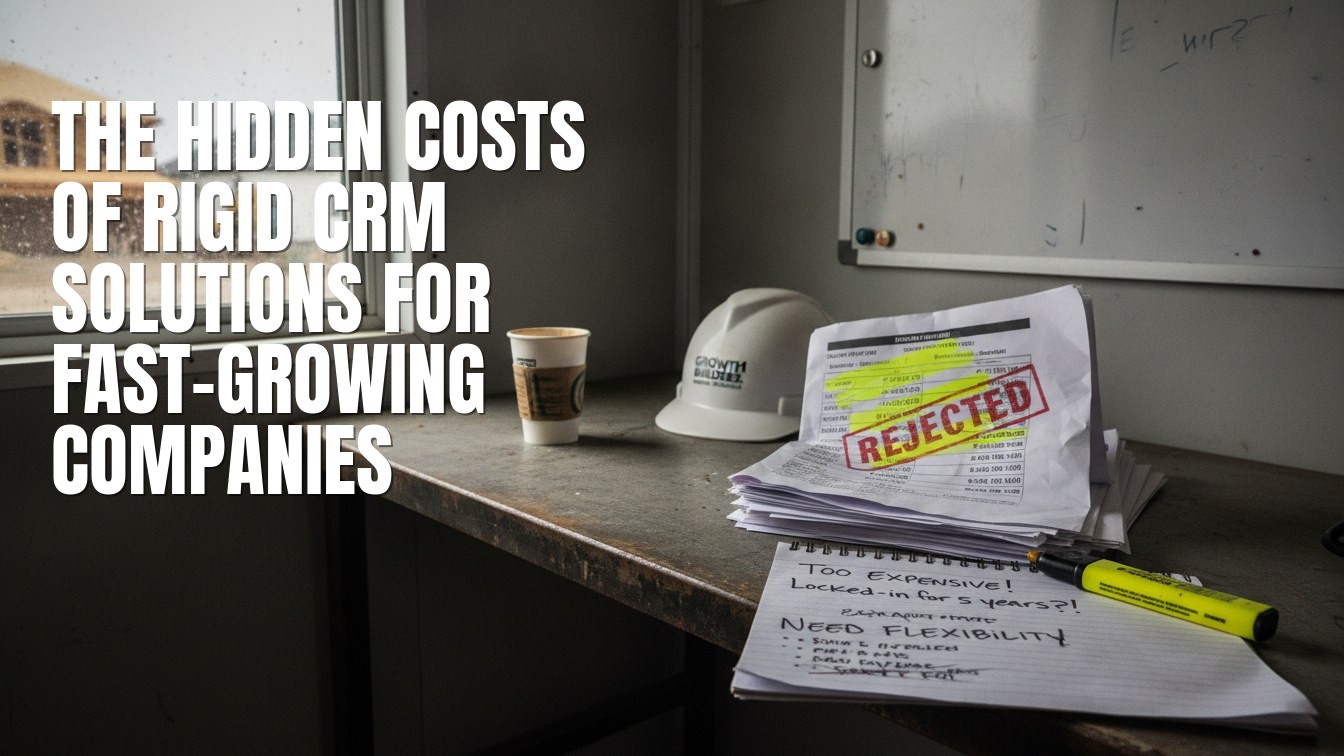
The Hidden Costs of Rigid CRM Solutions for Fast-Growing Companies
7/27/2026, 4:24 PM · By Yossi Medina | Service: Custom CRM Software Development
TL;DR
As businesses prepare for accelerated growth, the limitations of inflexible CRM systems can pose significant challenges. This article explores the pitfalls of rigid CRM solutions and how custom CRM development can address these issues to enhance operational efficiency and adaptability.
Rigid CRM systems can stifle growth potential. Discover the hidden costs of these solutions and how transitioning to a custom CRM can unlock your business's agility and efficiency.
Identifying the Pitfalls of Rigid CRM Solutions
In today's rapidly evolving business landscape, many companies are gearing up for expansion. However, during this growth phase, leaders often overlook a crucial component of their operational infrastructure: their CRM systems. Rigid, off-the-shelf CRM solutions can create a myriad of issues that not only hamper agility but can also incur substantial hidden costs. Understanding these pitfalls is essential for any organization aiming to facilitate smooth growth and maintain competitive advantage.
The Cost of Adaptability
As companies expand, their operational needs become increasingly complex. Rigid CRM systems typically lack the flexibility required to accommodate evolving business processes. This situation can lead to operational friction where teams struggle to adapt traditional practices to new demands. For instance, consider a local retail chain that experienced a surge in online sales during the pandemic. They relied on a standardized CRM solution, which could not easily integrate with their newly adopted e-commerce platform. As a result, customer data was fragmented, leading to delayed responses and a decline in customer satisfaction.
Operational Bottlenecks Created by User Unfriendliness
Another significant downside of inflexible CRM systems is their often convoluted user interfaces. These systems can be cumbersome and difficult to navigate, resulting in frustration among employees who struggle to access vital information quickly. A regional logistics company may struggle with this issue, where outdated CRM software leads to slow data entry processes. The additional time spent on training employees to learn these systems only compounds losses in productivity. Ultimately, this creates a vicious cycle where operational delays hinder growth.
Examples of Cost Implications
To illustrate the financial impact of these issues, let's look at a hypothetical scenario. A marketing agency has invested thousands into a well-known CRM platform that cannot accommodate their workflow needs. Although upfront costs might seem manageable, the long-term expenses become apparent as they face:
- Decreased employee productivity due to a complicated interface
- Loss of potential clients from inefficient follow-ups
- Costly workarounds to integrate disconnected systems
Over the course of a year, these factors could lead to losses exceeding tens of thousands of dollars. Such is the dire reality for many businesses locked into rigid systems.
Scaling Challenges with Standard Solutions
For companies aiming to expand into new markets, standard CRM solutions often lack the necessary customization. These platforms can limit your ability to track and analyze customer behavior in specific regions or demographics. A real-world example could be a SaaS startup poised to launch internationally but facing challenges in engaging new customer segments due to inadequate CRM functionality. Their inability to customize their approach can diminish their market penetration and risk their comprehensive strategy.
Finding the Right Solution: The Case for Custom CRM Development
As organizations confront the challenges of rigid CRM systems, many are turning toward custom CRM development as an effective solution. A tailored CRM can be designed specifically to meet the unique workflows, objectives, and growth plans of your business. Unlike off-the-shelf solutions, a custom-built CRM provides flexibility, scalability, and above all, agility. Here’s how:
Streamlined Processes and Enhanced User Experience
Custom CRM systems can be optimized for user-friendliness, significantly reducing the training time required for employees and promoting faster adoption across the organization. By tailoring the interface and features to suit specific functions, you empower your team to access information quickly and efficiently. A local financial service provider that shifted to a custom CRM reported a 30% increase in overall operational efficiency within just a few months of deployment.
Integration with Existing Tools for Seamless Functionality
One of the most significant advantages of a custom CRM is the ability to integrate seamlessly with existing tools and platforms your organization uses. Whether it's accounting software, marketing automation systems, or e-commerce platforms, a customized solution enhances data flow and ensures that your teams can collaborate effectively. A local e-commerce retailer that implemented a custom CRM found that integrating their sales and inventory management systems improved their sales forecasting, resulting in better stock management and fewer customer complaints.
Enhancing Customer Experience Through Customization
Another critical area where rigid CRM solutions fall short is in customer experience personalization. In a world where customers expect tailored interactions, a one-size-fits-all approach severely limits the ability to engage prospects and clients meaningfully. Custom CRMs enable flexibility in customer journey mapping, allowing businesses to implement dynamic workflows that adapt to individual customer behaviors.
For instance, imagine a tech startup that businessizes with the aim of serving a niche market. When using a rigid CRM, their ability to capture and analyze customer interactions is compromised, leading to generic outreach that fails to resonate with potential clients. A custom CRM, on the other hand, can facilitate a layered understanding of customer preferences, thereby enabling businesses to craft marketing campaigns that align with specific interests or pain points. A local tech service company, for example, saw a dramatic improvement in customer retention after implementing a tailored CRM that tracked customer feedback and adjusted outreach strategies in real-time.
The impact of personalization on customer satisfaction cannot be understated. Research indicates that customers are more likely to stay loyal to brands that understand and anticipate their needs. By utilizing a custom CRM, companies can harness data insights to not only meet those expectations but to exceed them, fostering an environment where customers feel valued and understood.
Scaling Effectively with Custom Solutions
As fast-growing companies scale, the need for adaptable systems becomes even more vital. Rigid CRMs often create bottlenecks in processes, hindering growth and agility. Custom solutions, conversely, are designed to evolve alongside your business, accommodating new challenges and opportunities as they arise.
Consider a healthcare startup that started small but quickly expanded their reach. A generic CRM would likely struggle to handle the influx of new patient data and complex regulatory compliance requirements. A customized CRM solution, built specifically for healthcare providers, would facilitate the integration of critical elements like patient management, billing, and compliance, ensuring that as the organization scales, their system continues to operate smoothly. This not only preserves operational efficiency but also enhances the quality of care provided, translating into better patient outcomes.
Additionally, as businesses grow, the need for cross-departmental collaboration intensifies. Custom CRMs can be tailored to support interdepartmental processes, such as sales aligning with marketing or product development synchronizing with customer service. This level of integration not only fosters a unified approach but also streamlines workflows that can easily stagnate in rigid systems.
Data Security and Compliance with Custom Solutions
Data security is an ever-pressing concern for businesses regardless of industry, and rigid CRM solutions may not offer the robust security features necessary to meet evolving compliance requirements. In industries like finance and healthcare, where sensitive customer data is the norm, the inability to customize security protocols can expose organizations to significant risks.
With a custom CRM, security measures can be tailored specifically to address your unique vulnerabilities and compliance obligations. This level of control empowers businesses to establish stringent user access controls, data encryption standards, and real-time monitoring capabilities, ensuring that customer data remains secure.
Moreover, a tailored solution allows businesses to adapt quickly to new regulations. When GDPR or HIPAA updates roll out, organizations using custom CRMs can swiftly implement the necessary changes. In contrast, those bound to rigid systems may struggle to remain compliant, risking hefty fines and damage to their reputation.
Ultimately, a custom CRM isn’t just about meeting today's needs; it’s about preparing your business for the complexities of tomorrow's challenges. By prioritizing flexibility, personalization, security, and cross-functional collaboration, fast-growing companies can ensure that they not only remain competitive but excel in an increasingly demanding marketplace.
The Bottom Line
As businesses head towards growth, the limitations imposed by rigid CRM systems can stifle potential and incur substantial hidden costs. Recognizing these pitfalls and understanding the serious implications of operating without flexibility is crucial for decision-makers. Custom CRM development presents a viable solution, allowing businesses to craft a system that supports their unique needs and growth goals.
If you're evaluating your CRM strategy and considering the path to greater operational efficiency, your first step should be to explore custom CRM development. This change can transform how your organization interacts with its data and customers, ultimately setting the stage for sustainable success and adaptability.
To discuss how we can help optimize your CRM for growth, contact us today.
If you want this handled for your business, contact us today.