Why Generic CRM Solutions Are a Hidden Revenue Sinkhole
8/3/2026, 12:06 PM · By Yossi Medina | Service: Custom CRM Software Development
TL;DR
Off-the-shelf CRM solutions often create friction for businesses by failing to meet unique needs, resulting in inefficiencies and lost revenue. This article explores the common pitfalls of generic CRMs and illustrates how custom CRM software development can provide tailored solutions that drive growth and efficiency.
Discover how off-the-shelf CRM systems may not align with your unique business needs, leading to operational inefficiencies and lost revenue. Learn how custom CRM development can provide the tailored solution your organization requires.
The Hidden Costs of Using Generic CRMs
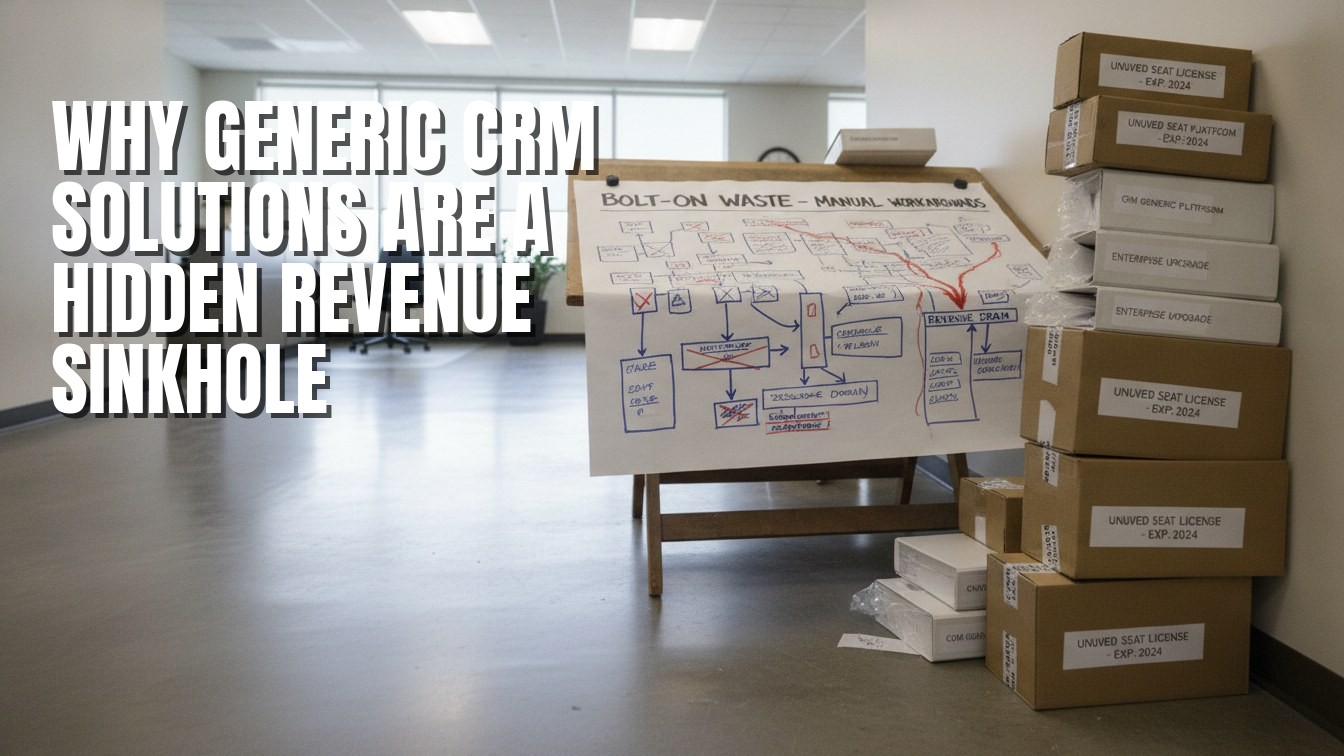
When it comes to managing customer relationships, many businesses turn to off-the-shelf CRM solutions, hoping for a quick fix to their operational challenges. However, generic CRMs often act as a hidden revenue sinkhole, leading to inefficiencies and missed opportunities. From wasted time to disjointed workflows, the risks of using a one-size-fits-all CRM can be significant.
Businesses often implement these systems with the expectation of better organization and improved customer interaction. Yet, the reality is that these tools usually fail to account for the specific nuances and workflows unique to each organization. This disconnect can lead to operational friction that undermines productivity and has the potential to adversely affect revenue generation.
Operational Friction: What It Looks Like in Practice
Consider a mid-sized e-commerce company that adopted a popular off-the-shelf CRM. Initially eager for enhanced tracking of customer interactions and streamlined sales processes, the team faced issues almost immediately. The generic CRM didn’t integrate well with their existing systems. Customer service representatives wasted valuable time manually entering data across platforms, leading to inconsistencies and errors. Sales teams also found themselves bogged down, as the automated features didn’t align with their specific sales strategies or reporting needs.
This situation is not unique. A Cogent Reports study found that over 60% of CRM users believed their system didn’t meet their organization's unique needs, leading to wasted resources and frustrated employees. The impact on customer satisfaction and retention, as well as the additional costs related to employee turnover or system customization, can add up rapidly.
What Businesses Need to Avoid
While the allure of off-the-shelf CRMs can be strong, the potential pitfalls are immense. Here are some specific challenges faced by businesses relying on generic CRM solutions:
- Disjointed Workflows: Generic CRMs often fail to fit seamlessly into existing business processes, leading to convoluted workflows.
- Limited Customization: Features may lack the flexibility needed to adapt to specific industry requirements or company practices.
- Stagnant Scalability: As businesses grow, their needs evolve, and a generic CRM may not accommodate that growth without significant additional costs.
- Data Silos: Many off-the-shelf solutions create data silos that impede collaboration between teams, leading to a lack of cohesion and communication.
- Increased Training Burden: Employees may require extensive training to use a generic system effectively, diverting attention from customer-centric tasks.
A Real-World Example of CRM Failure
In 2020, a large manufacturing firm opted for a popular generic CRM to manage their customer interactions across various departments. The team was optimistic but quickly found that the CRM lacked proper integration with their supply chain management software. This disjointedness caused delayed order processing and miscommunication. Customers faced longer wait times, and satisfaction ratings dropped.
The financial toll became evident almost immediately. The firm calculated that operational delays caused by their CRM totaled over $500,000 in lost sales over the course of a single year, emphasizing the critical link between effective customer relationship management and revenue. Had they invested in custom CRM development, they could have tailored the system to align with their existing infrastructure and customer management processes, preventing these losses.
The Custom Development Advantage
Custom CRM software development offers a compelling solution to the issues faced with generic systems. By building a tailored CRM that aligns with business-specific workflows and requirements, companies can eliminate operational friction and significantly enhance efficiency.
With custom development, businesses can:
- Integrate Seamlessly: Custom CRMs can integrate with existing systems and processes, ensuring a smooth transition and operation.
- Tailor Functionality: Businesses can have features built specifically for their needs, enhancing user experience and productivity.
- Scale Flexibly: As businesses grow and evolve, they can easily modify their custom solution to meet new demands without the limitations imposed by off-the-shelf solutions.
- Enhance Data Utilization: Properly designed custom CRMs can break down data silos, facilitating better communication and collaboration.
- Increase Employee Satisfaction: With tools that readily support their workflow, employees can focus on high-impact tasks rather than grappling with clunky systems.
Turning the Tide: A Case Study
A technology consulting firm recognized the limitations of their generic CRM when client retention rates started to decline. They transitioned to a custom CRM solution designed with precise client communication strategies in mind. The result? Not only did their client retention improve by over 40% in the subsequent year, but the personalized service enabled them to upsell premium services effectively, leading to an overall revenue increase of 25%.
Navigating Your Options for Success
For organizations still relying on generic systems, acknowledging the limitations is the first step toward improvement. Consider evaluating your existing CRM processes and identifying specific areas of operational friction. What aspects hinder productivity? Where does valuable data fall through the cracks?
Next, think about the potential of custom CRM software development as a tailored solution to drive growth. Whether you’re facing integration issues, seeking better scalability, or simply need a system designed around your unique workflows, custom development can align your operational objectives with your technological needs.
Beginning Your Custom Development Journey
Starting the journey towards effective custom CRM software development requires careful planning and collaboration. Engaging with a development team who understands both your industry and your operational challenges is essential. A team that prioritizes user experience can craft a solution that resonates with your internal processes, your customer engagement strategies, and your overall business objectives.
In conclusion, while off-the-shelf CRMs may appear to be an easy choice, their hidden costs can be significant, stifling growth and efficiency. By embracing custom CRM development, businesses can mitigate these issues, enhance operational productivity, and unlock hidden revenue streams. Ready to see this process in action for your business? Contact us today.
Understanding the Impact of a Tailored CRM on Customer Relationships
At the heart of any successful business lies the ability to foster strong customer relationships. A generic CRM system often falls short in this regard, primarily because it lacks the capacity for customization that resonates with your unique clientele. This inadequacy can lead to missed opportunities in not only gathering customer data but also in effectively analyzing and interpreting it for actionable insights. By leveraging a custom CRM solution, your business can utilize relevant customer data not just to understand behavior, but to anticipate needs and proactively respond to them.
A tailored CRM allows businesses to segment their customers more effectively, providing insights that lead to targeted marketing campaigns and personalized communications. This depth of understanding enhances customer loyalty and satisfaction, as clients feel acknowledged and valued through tailored approaches that a generic system simply cannot provide.
Moreover, a dedicated CRM's ability to integrate seamlessly with other internal systems magnifies its effectiveness. When your customized CRM communicates with your inventory management, financial systems, and marketing tools, it creates a unified hub of information. This holistic view allows for better decision-making and resource allocation, which can ultimately elevate customer experience and satisfaction. Imagine sending targeted promotions based on real-time inventory levels or conducting follow-ups after service interactions, all of which are feasible with a solution specifically designed for your business.
Leveraging Automation for Enhanced Efficiency
Automation is another pivotal advantage of a custom CRM solution. Generic alternatives often come with rigid automation options that may not align with the unique workflows of your business. To capitalize on your team's potential, your CRM should automate repetitive tasks that drain resources and time. With tailored automation protocols, organizations can ensure that high-value tasks receive the focus they deserve while mundane processes are handled efficiently.
In this sense, automation can also assist in lead nurturing processes. A custom CRM can schedule timely follow-ups, send personalized emails based on customer interactions, and trigger alerts for your sales team when high-potential leads enter the pipeline. This level of automation fosters a proactive rather than reactive approach, enhancing the effectiveness of your sales process and allowing your team to focus on closing deals instead of manual data entry or repetitive communications.
Data Security and Compliance Considerations
In today’s digital landscape, data security is paramount. Off-the-shelf CRM systems may not adequately address industry-specific compliance requirements, which, if overlooked, can lead to significant legal and financial penalties. Utilizing a custom-built CRM allows businesses to incorporate robust security measures specific to their operational and regulatory landscape. By developing a system tailored to your compliance needs, your organization can safeguard customer data and build trust with clients who increasingly prioritize data privacy and security.
Considering the increasing complexity of data regulations worldwide, a customized approach enables your business to adapt to changes effectively. Whether it involves GDPR in Europe or CCPA in California, having a tailored solution ensures that your business is always a step ahead in compliance and customer trust.
The Cost-Benefit Ratio of Custom CRM Solutions
Many businesses are understandably hesitant to invest in custom software due to perceived costs. However, it is crucial to analyze the cost-benefit ratio of custom CRM solutions holistically. While the initial investment may be higher than deploying a generic CRM, the long-term benefits often far outweigh the costs associated with inefficiencies and lost opportunities.
Consider the costs incurred through poor customer retention, missed sales opportunities, and the detrimental impact of fragmented customer data. These hidden costs should be factored into the equation. Custom CRM solutions enhance customer retention by offering meaningful interactions, streamlined support, and tailored service strategies, all of which contribute to increased revenue and reduced churn rates.
Furthermore, the implementation of a custom solution often includes ongoing support and updates, ensuring that your system evolves alongside your business needs and technological advancements. This adaptability can save your organization from the pitfalls of stagnant technology, which generic solutions often fall victim to, as they fail to scale with your evolving business landscape.
The Role of Stakeholder Input in Custom Development
A successful custom CRM solution stems from the collaboration of diverse stakeholders within your organization. It is essential to involve various departments, such as sales, marketing, customer service, and IT, in the planning phase. By collecting input from end users, you can identify pain points, desired features, and operational hurdles that generic systems overlook.
Creating a custom CRM that reflects input from across the organization ensures buy-in from those who will interact with the system daily. Stakeholder engagement in the early stages not only boosts the likelihood of user adoption post-implementation but also results in a solution that genuinely meets the tactical needs of your business.
As these teams collaborate on defining their processes and expectations, it becomes increasingly clear that a one-size-fits-all solution will always fall short. A tailored approach creates a more user-friendly experience whereas an off-the-shelf product often requires users to adjust their workflows to fit the constraints of the software.
In summary, while selecting the right CRM platform is a critical decision for businesses, embracing the journey toward customized solutions can yield significant returns. From fostering customer relationships to enhancing operational efficiency and compliance, the value of a tailored system cannot be understated. As the competitive landscape intensifies, providing unique and personalized experiences will be integral to sustained growth and success.
Understanding the Cost of Customization
One might argue that customizing a CRM solution is an expense that many businesses cannot afford. However, the real cost lies not in customization, but in the potential losses incurred from using a generic CRM. Generic solutions often create friction within existing workflows, leading to lost productivity, decreased employee satisfaction, and ultimately, lost revenue. While the initial investment in a tailored system may seem daunting, when weighed against these hidden costs, it becomes clear that customization is a wise long-term strategy.
Furthermore, the impact of a poorly implemented generic CRM can extend beyond immediate financial losses. Disjointed processes contribute to errors and delays, reducing the quality of customer interactions. Customers expect seamless communication and personalized service, and failing to meet these expectations can drive them toward competitors. A tailored solution, on the other hand, enables businesses to deliver superior customer experiences that foster loyalty and drive returns. By investing in a customized CRM, companies position themselves as reliable partners in their customers’ journeys, enhancing retention rates and encouraging repeat business.
The Role of Data Integration in Maximizing CRM Value
Another critical factor to consider when evaluating CRM solutions is the importance of data integration. Generic CRMs often lack the flexibility required to connect with other essential tools used within an organization. This disconnected approach leads to fragmented data silos, making it difficult to obtain a comprehensive view of customer interactions and insights. A customized CRM, however, can be designed to smoothly integrate with existing data systems, ensuring that all relevant information is accessible and actionable.
By leveraging integration capabilities, businesses can collaborate more effectively and make informed decisions based on a holistic understanding of their customer base. This interconnectedness enhances responsiveness and allows for more targeted marketing campaigns, ultimately driving sales and revenue. Moreover, companies can harness predictive analytics to identify emerging trends and opportunities, positioning themselves ahead of the competition.
Enhancing User Adoption through Customization
Another considerable advantage of tailored CRM solutions lies in user adoption. Generic platforms often have a steep learning curve due to their rigid functionality and user interface, making it challenging for employees to fully embrace the system. This lack of engagement can result in underutilization, where teams fail to leverage the comprehensive capabilities of the CRM effectively.
Conversely, a custom CRM can be designed with the end user in mind, featuring an intuitive interface and options that align with the specific roles within the organization. When users feel the system is built for their needs, they are more likely to engage and utilize its full potential. Enhanced productivity and improved morale often follow, as employees are equipped with the appropriate tools to excel at their jobs.
Future-Proofing Your Business with Tailored Solutions
The digital landscape is constantly evolving, meaning that businesses must be agile and adaptable. Generic CRMs may not keep pace with technological advancements or shifts in market dynamics, leaving your organization vulnerable. A bespoke solution, however, can be designed to evolve alongside your business, allowing for updates and expansions as new technologies emerge and business needs change.
Investing in a custom CRM means investing in the future of your business. By having a platform that can grow and adapt, you safeguard against obsolescence, ensuring that your operations remain cutting-edge and competitive. Moreover, by future-proofing your system, you are better positioned to embrace innovations such as artificial intelligence, machine learning, and automation, which were previously out of reach with outdated generic solutions.
In conclusion, while the allure of generic CRM solutions lies in their perceived cost-effectiveness and quick implementation, the risks associated with their use far outweigh these benefits. By choosing to invest in a tailored solution, businesses unlock not only improved revenue potential but also enhanced operational efficiency, user adoption, and the ability to adapt over time. As the market continues to shift and evolve, those equipped with a comprehensive and responsive CRM solution will undoubtedly have the competitive edge needed to thrive.
If you want this handled for your business, contact us today.